


Sign In / Sign Up To Add Wishlist
Wishlist is available for members only. Please sign in or sign up to add your wishlist.
Work From Home Tax Deductions: What Can You Claim?

If your kitchen table often becomes a temporary desk, your spare room is now an office, or your garage doubles as the HQ for your side hustle, you’re not alone - working from home is now a normal part of life for many Australians. According to the most recent data from the Australian Bureau of Statistics, 36% of employed people usually work from home.
Along with the flexibility of a home office comes the opportunity to claim working from home expenses. However, understanding exactly what you can claim - and how to claim it correctly -can feel overwhelming at tax time. The Australian Taxation Office (ATO) has specific rules regarding home office expenses. Getting your tax return right is not just about maximising your legitimate claims; it’s also about keeping accurate records to avoid common pitfalls like "double-dipping."
This guide breaks down everything you need to know about navigating home office expenses, from choosing the right calculation method to understanding exactly what office equipment you can claim on tax.
Disclaimer: This content is provided for general informational purposes only and should not be relied on as professional tax advice. As tax laws and eligibility requirements may change, please check the latest information from the ATO and consult a registered tax agent or accountant for advice tailored to your situation.
Understanding the ATO Rules for Home Office Expenses
Before you start tallying up your receipts for office chairs and printer ink, it’s important to understand the ATO’s three golden rules for claiming work-related expenses:
- You must have spent the money yourself, and you must not have been reimbursed by your employer
- The expense must directly relate to earning your income. You can’t claim personal expenses
- You must have a record to prove it (such as a receipt or a detailed logbook)
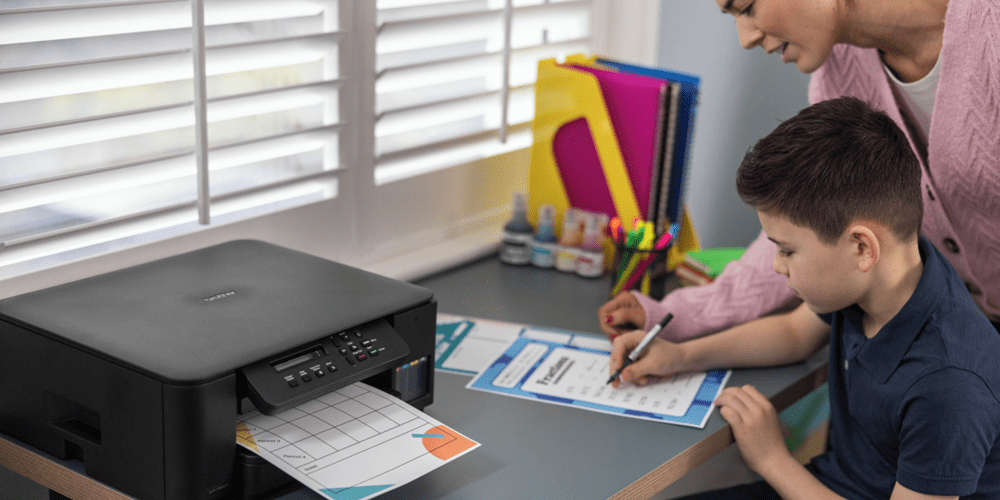
If your expense meets these criteria, you’re on the right track. However, because working from home often blends personal and professional life, the ATO requires you to work out the work-related portion of your expenses. If you buy a reliable printer that is used 70% of the time for client contracts and 30% of the time for your children’s school assignments, you can only claim 70% of the cost.
What Office Equipment Can I Claim on Tax?
One of the most common questions taxpayers ask is, "what office equipment can I claim on tax?" If you’ve invested in technology or furniture to help you stay productive, organised and running smoothly, you can generally claim these costs.
Claimable office equipment typically includes:
- Technology: Computers, laptops, tablets and monitors.
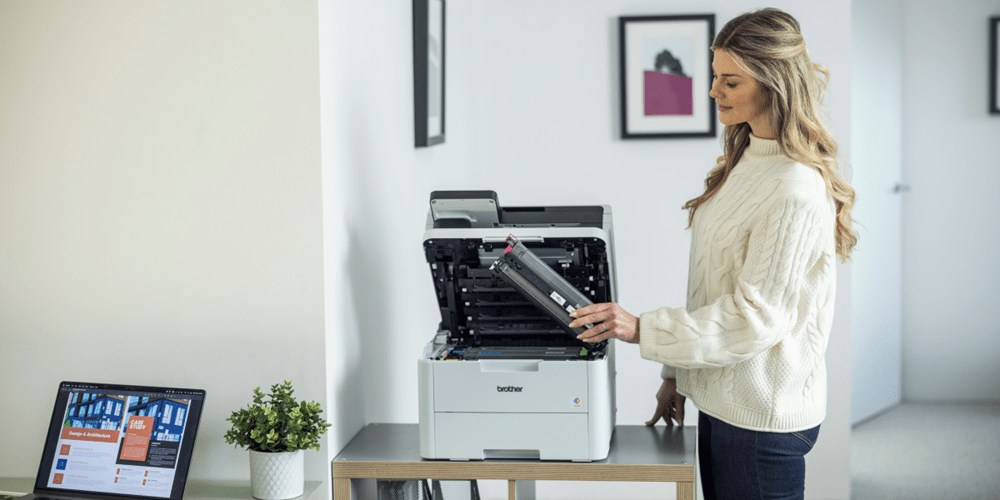
- Printing and scanning devices: Printers, scanners and label printers. For small office users or e-commerce businesses needing fast, accurate shipping labels, investing in dependable devices is essential for day-to-day operations. For example, a compact all-in-one printer such as the Brother MFC-J4555DW suits home office users who need printing, copying and scanning in one device, while a dedicated label printer like the Brother QL-1110NWB can be a practical fit for side hustles or online sellers printing shipping labels more regularly.
- Furniture: Ergonomic office chairs, standing desks and filing cabinets.
.webp?h=500&w=1000&rev=00b9674ae7c746acb49dfccd1d1f33e2&hash=2C4332F77B373A0A050B7BA8BA33D72C)
The $300 Rule: Immediate Deduction vs. Depreciation
How you claim these assets depends on their purchase price:
- Items costing $300 or less: If you buy a piece of equipment for your home office that costs $300 or less like the Brother DCP-J1260W, you can generally claim an immediate deduction for the work-related portion of the item in the financial year you bought it.
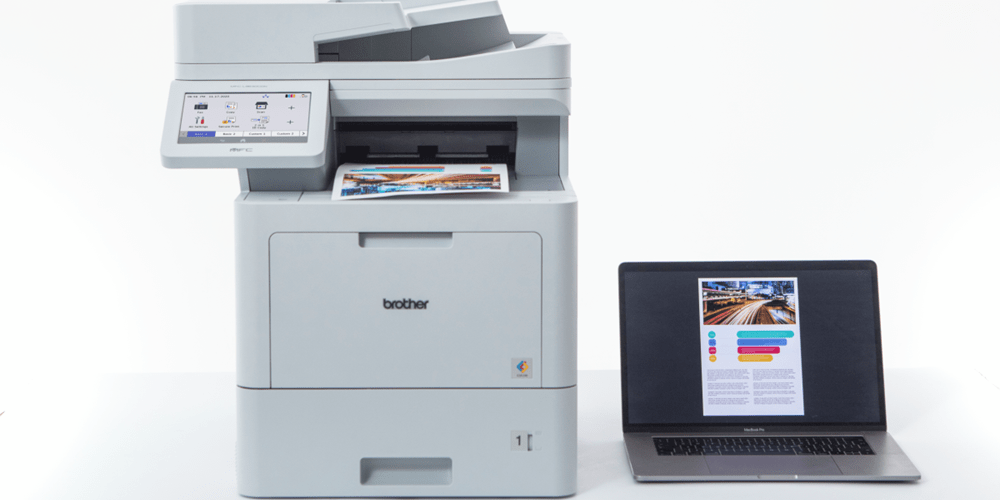
- Items costing more than $300: For more substantial investments - like a high-volume business printer like the Brother MFC-L9630CDN or a premium laptop - you can’t claim the full cost upfront. Instead, you must claim the deduction over the life of the asset. This is known as depreciation (or the decline in value).
Note for small businesses: If you’re a self-employed sole trader or run a small business, you may be eligible for the instant asset write-off or other simplified depreciation rules depending on the current government thresholds for that financial year. Always consult with a registered tax agent to see which business concessions apply to you.
Choosing Your WFH Tax Deduction Method
When it comes to claiming running expenses - the daily costs of keeping your home office operating - the ATO says you must use one of its approved working from home expense methods. You can choose the method that gives you the best outcome, provided you meet the record-keeping requirements for it.
1. The Revised Fixed Rate Method (70 cents per hour)
The revised fixed rate method allows you to claim 70 cents for every hour you work from home. This single rate covers the following running expenses:
- Electricity and gas (heating, cooling, and lighting)
- Internet expenses
- Mobile and home phone usage
- Stationery and computer consumables (such as printer paper, ink and toner)
Important caveat: If you choose this method, you can’t claim a separate deduction for any of the expenses listed above. The 70 cents per hour covers them entirely.
However, you can claim the depreciation of your office equipment (like your computer, printer, or desk) separately, on top of the 70 cents per hour. This makes the fixed rate method a popular, straightforward choice for home users and professionals who want to minimise complex calculations while still getting a fair deduction.
2. The Actual Cost Method
The actual cost method allows you to claim the exact work-related portion of your actual home office expenses. This method can produce a higher deduction if you’ve significant ongoing costs, but it requires more detailed records.
You’ll need records that show the amount you spent, how much of that expense was work-related, and how you calculated your claim. Depending on the expense, that can include bills, receipts and a diary or other evidence showing your work-related use over a representative period.
How to Avoid "Double-Dipping" and Audit Risks
Every tax time, the ATO warns Australians about "double-dipping." This occurs when a taxpayer claims an expense under a flat rate method, and then mistakenly claims it again as an individual item.
For example, if you use the 70 cents per hour fixed rate method, you’ve already been compensated for your internet usage and your printer ink. If you then add a $100 internet bill or a receipt for replacement toner to your tax return, you’re double-dipping.
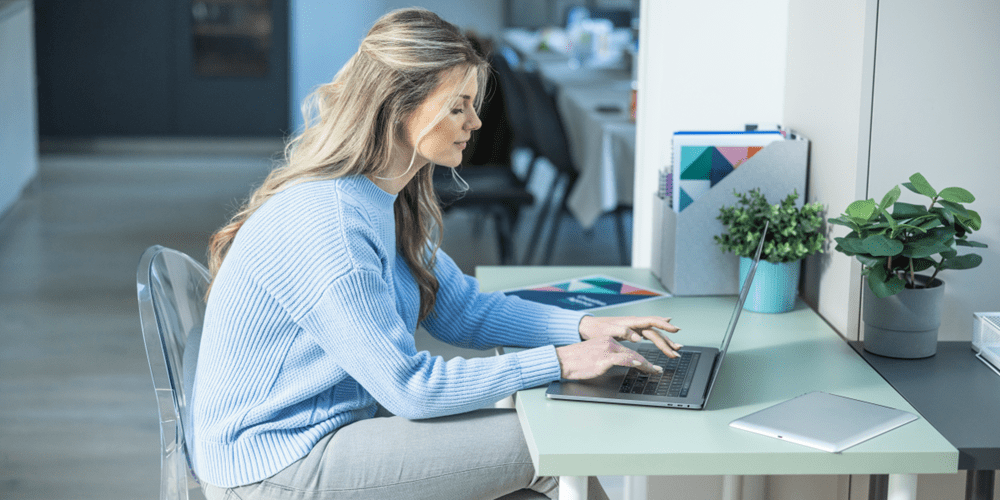
To avoid audit risks:
- Understand your method: Know exactly what is and isn't included in the fixed rate method
- Apportion correctly: Never claim 100% of an internet or phone bill unless you’ve a dedicated, separate connection used exclusively for your business
- Keep personal expenses out: You can’t claim occupancy expenses (like rent, mortgage interest, or council rates) just because you work from home, unless you’re running a legitimate home-based business with a dedicated work area that has the character of a place of business
Record-Keeping: What You Need for Tax Time
The ATO is strict about records you need to keep. If you don’t have the right records, you can’t make the claim.
To claim your home office expenses compliantly, you should keep:
- A record of your hours: Under the revised fixed rate method, the ATO no longer accepts estimates based on a four-week diary. You must keep an ongoing, exact record of the total hours you worked from home for the entire income year. This can be a timesheet, a roster, or a diary
- Receipts for equipment: Keep all receipts for office furniture, printers, scanners, and technology. If the item costs more than $300, keep records showing how you calculated its decline in value
- Proof of running costs: Even if using the fixed rate method, you must keep one document (like an electricity or internet bill) for each of the running expenses you incurred during the year
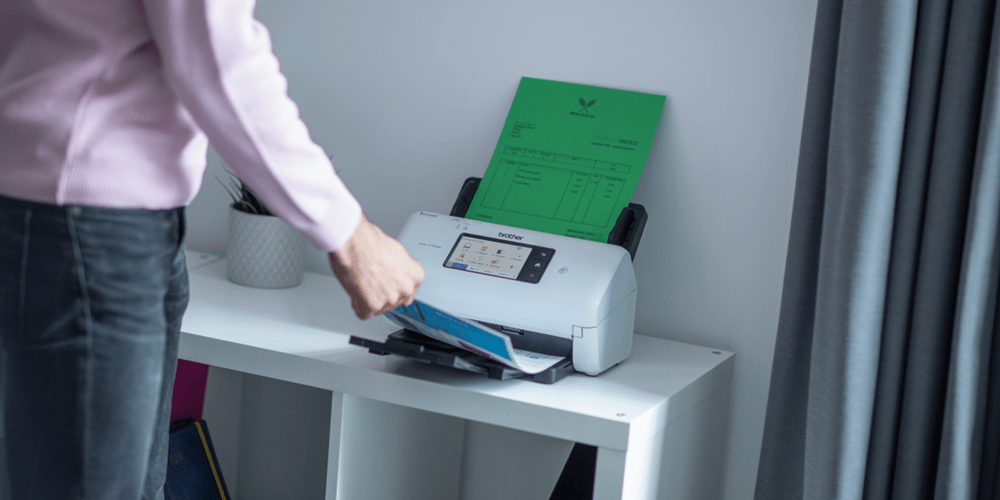
Practical tip: Faded thermal receipts are often rejected by the ATO. Using a fast, dependable document scanner to digitise your receipts as soon as you receive them ensures your records stay clear and readable. You can save these digital copies directly to your computer or upload them to the ATO’s myDeductions app, making your end-of-year tax prep much simpler and less frustrating.
By understanding the rules, choosing the right method and maintaining clear records, you can confidently claim your work from home tax deductions without unnecessary stress at tax time.
Comments

WFH Setup for Winter: Stay Warm, Efficient & Organised
Build a winter remote work setup that balances comfort & productivity. Explore tips like a warm desk lamp, thermal mug and compact printer for your winter work routine.
How to print A5 more cost effectively using an A4 printer
Learn how to print A5 on an A4 printer using standard A4 paper and the Brother Print & Cut. Get tips for neat A5 single sheets and faster finishing.

Finding the best printer for home use
Discover the best home office printers in Australia. Compare top Brother home printer models for families, students, remote work and budget-friendly printing.

Resource Library
Explore our range of eBooks, Whitepapers & Case studies
Be the first to receive ongoing exclusive offers and the latest news on our products and services directly in your inbox!