


Sign In / Sign Up To Add Wishlist
Wishlist is available for members only. Please sign in or sign up to add your wishlist.
Back To News Releases
Brother's GTX300NC lets garment printers run DTG and DTF from a single machine
20 July 2026
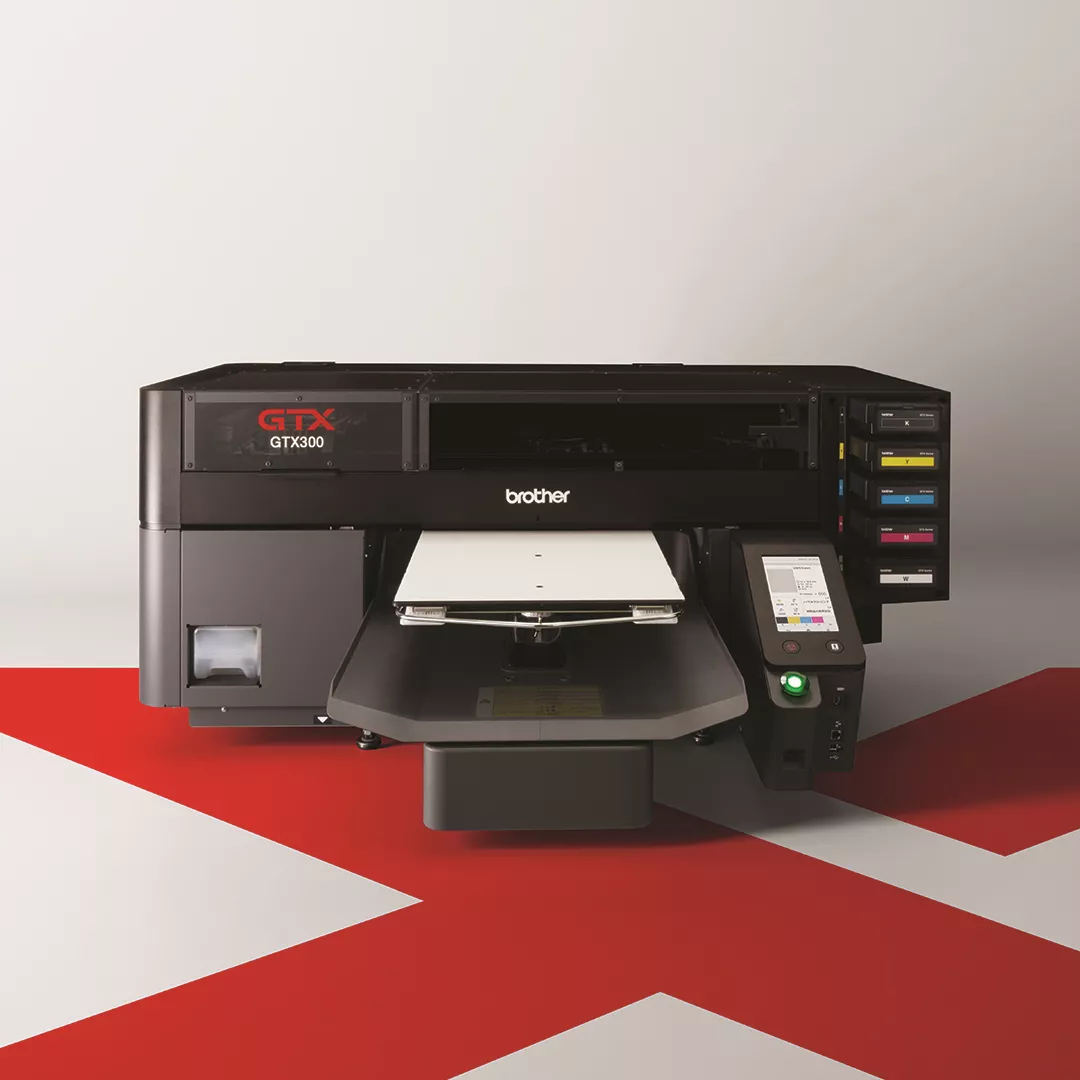
New hybrid printer replaces the GTX Pro Pouch, adding cut-sheet DTF capability without a second machine on the production floor
SYDNEY, AUSTRALIA - 20 July 2026: Brother International Australia has launched the GTX300NC, a garment printer that runs both Direct to Garment (DTG) and Direct to Film (DTF) processes from the one unit. It replaces the GTX Pro (GTX Pro 423) in Brother's line-up and follows the same printer's release in Japan in June 2026.
Most decorators today run DTG and DTF as separate processes, often on separate machines, because the two methods suit different fabrics: DTG prints directly onto cotton, while DTF prints onto film that's then heat-transferred onto polyester, blends and performance wear. The GTX300NC is built to switch between the two on demand, which Brother positions as a way to take on a wider mix of jobs - T-shirts, hoodies, polos, kidswear, tote bags, canvas, denim, workwear, sleeve prints and pocket placements - without adding a dedicated printer for each fabric type.
Switch workflows, not machines
In practice, that means an operator can print a cotton T-shirt run directly onto garments, then reload the same printer with film to produce transfers for a polyester or blended-fabric order, rather than routing that second job to different equipment or an outside supplier. Brother says the intent is to let a single GTX300NC “say yes” to a broader range of customer requests than a DTG-only or DTF-only setup would allow.
The hybrid capability sits inside a front-facing design, with garment loading, platen access, consumable replacement and daily maintenance all handled from the operator's side of the machine. Platens use quick-release levers and swap in seconds - relevant when a job mix means moving between DTG and DTF setups within a shift. The machine ships with a 355.6mm x 420.1mm (14in x 16.54in) Regular Platen, with an optional 406.4mm x 533.4mm (16in x 21in) Wide Platen sold separately for larger print areas.
DTF-specific engineering
As DTF is one half of the hybrid workflow, Brother has added features aimed specifically at film handling. Magnetic strips on both platens are designed to hold film flat during loading, addressing a common source of misalignment and wasted film in cut-sheet DTF work. The GTX Graphics Lab software, included with the printer, is built to handle design and print preparation for both DTG and DTF jobs from one interface rather than requiring separate software for each process.
Speed is a secondary benefit of the same engineering changes. Brother's published figures show the GTX300NC completing CMYK printing on light garments in approximately 41 seconds and CMYK+W printing on dark garments in 63 seconds, with DTF cut-sheet jobs at approximately 75 seconds - improvements the company attributes to an upgraded carriage drive system and newly developed print heads across both print modes, not just one.
Print quality across both processes
Output quality claims apply equally to DTG and DTF work: 1200 x 1200 dpi resolution, ICC colour profiling, and Brother's Innobella Textile inks, a five-colour CMYKW water-based pigment system with AATCC Wash Fastness Test Grade 4 certification and ECO PASSPORT certification for use on children's clothing. A new White Enhancement Function in the GTX Graphics Lab software is designed to produce brighter white base layers with reduced colour bleed on dark garments, regardless of which print process is used.
Managing a hybrid workflow at scale
The GTX300NC connects to Brother's Device Core cloud dashboard, which tracks total print counts, ink usage and error information in real time over a network connection. Combined with the 7-inch touchscreen's illustrated maintenance and troubleshooting guides, automated maintenance functions and continuous white ink circulation, Brother positions the monitoring layer as support for operators running a mixed DTG/DTF job queue across one or more machines.
Specifications
| Printing method | Direct garment and direct-to-film, piezo inkjet |
| Print heads | 2 units, piezo inkjet |
| Resolution | 1200 x 1200 dpi |
| Ink | Water-based pigment, 5 colours (CMYKW) |
| Standard platen | 355.6mm x 420.1mm (14in x 16.54in) |
| Max printable area | 406.4mm x 533.4mm (16in x 21in, Wide Platen) |
| Control panel | 7-inch touchscreen |
| Dimensions | 1295mm x 1465mm x 583mm (platen retracted) |
| Weight | Approx. 125kg including platen |
| Power | Single-phase 100–240V, 50/60Hz, 180W or less operating |
| Software | GTX Graphics Lab (included) |
| OS compatibility | macOS 14 Sonoma, macOS 15 Sequoia, Windows 11 (64-bit) |
Greg Benardos, National Sales Manager (DTG) at Brother International Australia, said the GTX300NC is intended to let businesses expand production without adding operational complexity: “Today's businesses need equipment that can adapt to changing customer demands without adding unnecessary complexity to their workflow. The Brother GTX300NC will make it easier to produce a wider range of products while delivering the speed, print quality and reliability Brother is known for.”
The Brother GTX300NC is backed by a 12-month onsite warranty, including printheads.
For more information and full product specifications, visit brother.com.au/en/garment-printers/all-garment-printers/gtx300nc.
Editor's note: Print speed and process details are Brother's own published specifications and vary by design, size, fabric and print settings.